Jiu Jitsu No-Gi Sizes
| Size | Weight | Height |
|---|---|---|
| S | 60-75kg | 160-170cm |
| M | 70-85kg | 168-178cm |
| L | 80-95kg | 175-185cm |
| XL | 90-110kg | 180-190cm |
| XXL | 105kg+ | 185cm+ |
Men's No-Gi BJJ Size Guide
Complete sizing charts for no-gi uniforms including shorts, spats, and rashguards. Find your perfect compression fit.
What is No-Gi Brazilian Jiu-Jitsu?
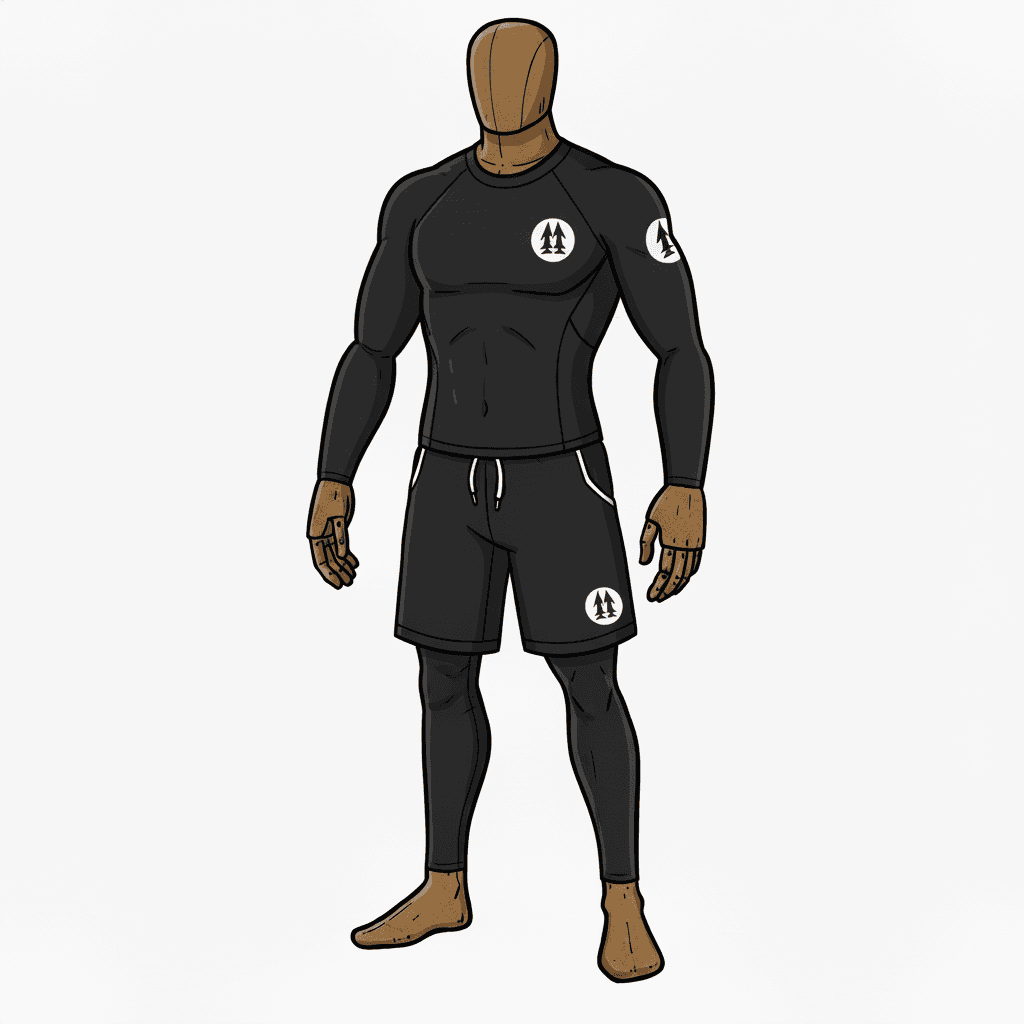
No-gi BJJ is Brazilian Jiu-Jitsu practiced without the traditional gi uniform, using rashguards, shorts, and spats instead.
No-gi training requires specialized gear designed for grappling without the ability to grab clothing. The uniform consists of three main components:
A rashguard is a tight-fitting, moisture-wicking shirt that protects your skin from mat burn and provides compression. Men's rashguards typically come in sizes S through XXL and should fit snugly without restricting movement.
No-gi shorts are designed without pockets or zippers that could cause injury. They're typically made from durable nylon or polyester blends and should provide adequate coverage while allowing full range of motion.
Spats (compression pants) are optional but popular for additional protection and compression. They fit tightly against the skin and help prevent mat burn on the legs.
For men, no-gi sizing focuses on finding the right compression level - tight enough to prevent opponents from grabbing material, but loose enough for comfortable movement. The fit should be athletic and form-fitting without being restrictive.
Uniform Guide Information
Essential information about competition rules, care, and materials
Competition Rules
Uniform Requirements for Competition
Understanding competition rules ensures your uniform meets standards and prevents disqualification.
IBJJF No-Gi Competition Rules
International Standards for No-Gi Competition
IBJJF no-gi competitions require tight-fitting gear that prevents opponents from gaining advantages through clothing. Rashguards must be tight-fitting and cover the torso completely, providing adequate coverage without excess material. Shorts must be tight-fitting with no pockets or zippers that could cause injury, and must reach at least halfway down the thigh. Spats and compression wear are allowed but must also be tight-fitting. No loose clothing that could be grabbed is permitted. All clothing must be clean and in good condition. Check current IBJJF rules for any color restrictions that may apply.
ADCC No-Gi Competition Rules
Premier No-Gi Competition Standards
ADCC is the premier no-gi competition organization, setting the standard for elite competition. Rashguards and shorts must be tight-fitting to prevent grabbing and ensure fair competition. No pockets, zippers, or loose material are allowed that could provide advantages or cause safety issues. Shorts must provide adequate coverage while maintaining a tight fit. Always check specific ADCC event rules for current requirements, as standards may evolve.
Local No-Gi Tournament Rules
Regional Competition Standards
Local no-gi tournaments may have relaxed rules compared to major organizations. Some allow looser-fitting shorts or have different coverage requirements. When in doubt, follow IBJJF standards to ensure compliance. Always check with tournament organizers for specific requirements before competing to avoid disqualification.
Washing & Care
Proper Maintenance for Your Uniform
Proper care extends your uniform's life and maintains hygiene.
Washing Instructions
Proper Cleaning Techniques
Start by checking all pockets and removing any items. Turn your gi or no-gi gear inside out to protect the outer fabric during washing. Use cold water (30°C or below) to prevent shrinkage, and select a mild detergent without bleach or fabric softener. Use the gentle or delicate cycle on your washing machine. For hand washing, use cold water with gentle agitation. On your first wash, consider pre-shrinking by washing in warm water if you want to minimize future shrinkage, though this is optional.
Drying Guidelines
Proper Drying Methods
Air drying is the preferred method for preserving your uniform's quality and preventing shrinkage. Hang your gi on a hanger or lay it flat to dry. Avoid direct sunlight to prevent color fading. If you must use a dryer, use low heat only and remove the uniform promptly when dry to prevent wrinkles. Hang by the shoulders, not the collar, to maintain the gi's shape and prevent stretching.
Essential Care Guidelines
Do's and Don'ts
Always wash your uniform after every training session for hygiene. Use cold water and turn items inside out before washing. Air dry when possible, check care labels, and wash separately, especially new gis. Never use bleach or fabric softener, as these can damage the fabric. Don't dry clean, iron (especially patches), leave wet gear in a bag, or use high heat. These practices will extend your uniform's life and maintain its quality.
Shrinkage Prevention
Maintaining Proper Fit
Most cotton gis shrink 3-5% after the first wash, which is why many practitioners buy slightly larger. Pre-shrink new gis with a warm wash before first use if you want to minimize future shrinkage. Always account for shrinkage when purchasing - consider buying slightly larger if you're between sizes. Cold water washing minimizes shrinkage. If your gi shrinks too much, some brands offer exchange programs, but prevention through proper sizing is key.
Stain Removal Guide
Treating Common Stains
For blood stains, rinse immediately with cold water, then apply hydrogen peroxide before washing. Sweat stains can be pre-treated with a white vinegar solution before normal washing. Mat marks require pre-treatment with stain remover and gentle scrubbing before washing. For general stains, treat immediately with cold water and avoid harsh chemicals. Always test stain removal methods on a small, inconspicuous area first.
Washing Frequency
How Often to Clean
Wash your uniform after every training session for hygiene and to prevent odors. Deep clean monthly with a vinegar solution to remove persistent odors and bacteria. Before competition, ensure your gi is freshly washed and pressed for a professional appearance. Never train in an unwashed uniform - it's unhygienic, disrespectful to training partners, and can lead to skin infections.
No-Gi Materials
Understanding Fabric Types
Understanding no-gi materials helps you choose gear that enhances your training.
Polyester Materials
Primary Rashguard Material
Polyester is the primary material used for rashguards, offering excellent moisture-wicking properties and durability. It maintains its shape well and dries quickly, making it ideal for performance wear. However, polyester can retain odors more than natural fibers and is less breathable. It's the standard choice for rashguards and performance-focused no-gi gear.
Spandex and Lycra
Compression Materials
Spandex and Lycra provide excellent stretch and compression benefits, making them essential for spats and compression shorts. These materials offer flexibility and form-fitting properties that enhance performance. However, they can lose elasticity over time and require careful washing to maintain their properties. Best for spats, compression shorts, and any form-fitting gear where compression and flexibility are priorities.
Nylon Materials
Durable Shorts Material
Nylon is a very durable material commonly used for no-gi shorts. It offers quick-drying properties and exceptional strength, making it ideal for high-intensity training. Nylon is lightweight yet strong, though it can be less breathable and flexible than other materials. Best for no-gi shorts where durability and quick-dry properties are priorities.
Material Blends
Optimal Performance
Polyester/spandex blends combine the best of both materials, offering moisture-wicking properties with stretch and compression. These blends provide optimal performance for rashguards and compression gear, creating comfortable fits that enhance training. While blends can be more expensive and require proper care, they offer superior performance characteristics. Best for performance rashguards and compression gear where both moisture-wicking and flexibility are important.
See which brands offer no-gi sizes
We have compiled data on no-gi sizing across major BJJ brands to help you find the right compression and fit for your training.